What Is Zero Trust Security? Complete Guide for Network Security Professionals in 2026
The digital world today has connected us all in ways we could never have imagined; thus, the traditional means of securing networks simply aren’t going to cut it anymore. The “castle-and-moat” approach (where anything inside the walls of your company was considered safe and anything outside the walls was considered dangerous) has fallen apart as a result of cloud technology, an increase in employees who work from home, as well as an increase in the sophistication of cybercriminals.
Zero Trust Security represents a viable solution to this challenge. Zero Trust Security is arguably one of the most important methodologies that a network security practitioner will need to learn in 2026. Whether you are preparing for your CCNA or CCNP Security (or Palo Alto) certification, getting the basics of Zero Trust down is now non-negotiable; it’s simply required.
This Ultimate Guide is designed to provide you with everything you need to know; it will explain what Zero Trust Security is, how the Zero Trust Network Access Model works, the five core principles of the Zero Trust Security Model, and finally, how to implement the Zero Trust Security Model in a real production environment.
What Is Zero Trust Security?
Zero Trust Security framework is a cybersecurity methodology built upon the central philosophy of “Never Trust, Always Verify.”
In opposition to traditional perimeter security which assumes users inside the network possess good intentions, the Zero Trust model assumes that there may be potential malicious attacks either internally or externally and therefore no user, application or device can be considered trustworthy.
The concept of “Zero Trust” was first introduced by John Kindervag, an ex-analyst at Forrester Research back in 2010, but it has since evolved into a comprehensive cybersecurity framework widely accepted by governments, private sectors and various regulatory organizations around the world (including NIST with its Special Publication 800-207).
Fundamentally, Zero Trust means that there must be continuous validation of every request at every stage, from a user on a device through to access of any resource (system or application).
Why Zero Trust Security Matters in 2026
Changes in the threat environment have created a need for Zero Trust Security to address current conditions and threats, including:
Work-from-Anywhere (WFA) and Remote/Hybrid Workforces: Millions of employees can now access corporate resources from anywhere in the world, including their homes, cafés and other locations, making traditional perimeter defences to prevent unauthorized access irrelevant.jDag
Cloud and Multi-Cloud Environments: Applications and data no longer only reside in on-premise data centres, they now also exist in our cloud providers such as AWS, Azure, Google Cloud, and SaaS platforms.
Ransomware and Insider Threats: Attackers can use social engineering and phishing techniques to gain legitimate credentials and then move laterally through trusted networks undetected.
Regulatory Compliance: With the growth of data and reliance on technology comes an increased need for legislated regulations, such as GDPR, HIPAA, and PCI-DSS (and India’s DPDP Act), which all mandate stricter access controls based on Zero Trust principles.
Nation State Attackers: Advanced Persistent Threats (APTs) from nation-state actors actively target critical infrastructure and therefore require zero-tolerance security architectures.
Organizations that have implemented the Zero Trust Architecture have experienced fewer data breaches and reduced the blast radius of attacks when they do occur and as reported by industry experts.
The Core Principles of the Zero Trust Security Model
The Zero Trust Security Model is not one single product or technology, rather it consists of guidelines or principles applied to people, processes and technology. The core guiding principles of Zero Trust Security include:
1. Verify Explicitly
Every access request must be authenticated and authorized based on all available information: user identity, user location, user appliance health, service/workload being accessed, data classification, anomaly detection. Multi-Factor Authentication (MFA) is the foundational minimum.
2. Use Least Privilege
Users and systems should be allocated only the minimal amount of access necessary to complete the assigned function (no more and no less) when accessing information. This principle applies to human users, service accounts, and machine identities. Role Based Access Control (RBAC) and Attribute Based Access Control (ABAC) are the core controls for achieving least privilege.
3. Assume Breach
Create your architecture based on the premise that an attacker is already on the network and has access to resources and information. This premise includes segmenting networks aggressively, encrypting data both while being transmitted and stored (at rest), monitoring all traffic with the full telemetry, and having developed incident response playbooks that are robust in nature.
4. Micro-Segmentation
Zero Trust’s approach to networks utilizes smaller and isolated areas rather than flat and open internal networks, which are segmented with separate authentication and authorization; preventing lateral movement should one zone be breached because an attacker cannot traverse any other zones.
5. Continuous Monitoring & Validation
The foundation of Zero Trust is that there is no “static trust”. The Zero Trust model requires continuous & real-time monitoring of user activity along with user-device trustworthiness. Therefore, should there be any anomalies found in user activity or device status or network traffic, access can be dynamically revoked or restricted based on user’s access privileges.
6. Device Health Check
When granting access to devices, it is important that access rights are determined based on endpoint security states/conditions. For example, determining whether or not a device is patched, has approved applications running, and/or is free from virus. Only devices meeting specified criteria will have access.
Zero Trust Network Access (ZTNA): The Operational Engine
Zero Trust Network Access (ZTNA) is the technology framework that puts Zero Trust principles into operational practice, specifically for remote and cloud access scenarios. It is rapidly replacing traditional VPN-based remote access solutions.
How ZTNA Works
With traditional VPNs, users are typically provided broad network access after successfully authenticating, which means that upon successful authentication, a user with an account has access to an organization’s entire network, regardless of whether they require or need the access. On the other hand, ZTNA provides application-specific access rather than access to the entire network. Following is an overview of the processes used by ZTNA:
- A user requests access to a specific application or resource;
- The ZTNA broker authenticates and identifies the user via the use of multi-factor authentication (MFA) and leveraging identity provider (IdP) integrations (e.g., Azure AD, Okta);
- The broker evaluates the user’s device against policy for compliance (e.g., patch level, OS version, endpoint security);
- Based on policy, the user is granted access only to that specific application and not to the full network; and
- The user’s session continues to be monitored, and may be revoked in real-time as the risk posture changes.
ZTNA vs. Traditional VPN: Key Differences
Access Scope – With a traditional VPN, a user has full network-level access from the moment they authenticate to the VPN (i.e., when they log into the VPN), which is like handing them the keys to the building. By contrast, Zero Trust Network Access only allows access to the application you are trying to access; nothing else.
Trust Assumption – Once a VPN establishes a connection with the user, it assumes that the user can be trusted implicitly. With ZTNA, continuous verification is applied throughout the entire session.
Visibility – VPN has a very limited view of session telemetry, while ZTNA offers complete logging and behavioral analysis of every interaction.
The biggest difference between VPNs and ZTNA is security; as VPNs allow lateral movement of information, when a hacker gains access to one user’s account, they can move to all other users within the network. Zero Trust Network Access offers application isolation almost eliminating lateral movement risk.
Another significant difference between VPNs and ZTNA is that VPNs were not developed for cloud computing environments – often causing degraded user experience through latency and complexity, while ZTNA™ is natively designed for cloud computing environments, allowing for a fast and efficient end-user experience.
ZTNA Deployment Models
Agent-Based ZTNA: A lightweight agent communicating a service; the agent runs on the device and passes data to an intermediary known as a “broker.” Examples of ZTNA brokers are Palo Alto Networks Prism Access and Zscaler Private Access.
Agentless ZTNA: Access via web browser without needing any software on the endpoint or for third-party contractors.
Any security professional working to get their certification for Palo Alto Networks, Fortinet or Cisco Security must understand what Zero Trust Network Access is because all these manufacturers have added Zero Trust Architecture into their current product lines.
The Five Pillars of Zero Trust Architecture
According to NIST and CISA, there are five foundational elements to implement Zero Trust Architecture as a cohesive strategy:
Pillar 1—Identity
Identity has become the new perimeter. Every user’s identity, every service account’s identity, and every non-human identity must be controlled through a centralized Identity Provider. Strong authentication methods, Multi-Factor Authentication (MFA), and Privileged Access Management (PAM) are essential.
Pillar 2—Devices
Every endpoint, whether a laptop, mobile device or an IoT device, must be inventoried, managed, and continuously evaluated for compliance. If any device is unmanaged or non-compliant, then those devices must either be quarantined or denied access completely.
Pillar 3—Networks
All networks must be micro-segmented. Software-Defined Networking (SDN) and SD-WAN technologies allow for dynamic, policy-based segmentation. East-West Traffic (internal) must receive the same type of inspection as North-South Traffic (external).
Pillar 4—Applications and Workloads
Applications must function with their own access control regardless of how the application communicates within the network. API security, workload identities and runtime application protection are important for securing Cloud Native environments.
Pillar 5—Data
All data should be properly classified, labelled, and protected against unauthorized access. Data Loss Prevention (DLP), encryption, and Rights Management Policies can be used to help protect sensitive data at rest and in transit.
Implementing Zero Trust Security: A Step-by-Step Approach
If you are a network security expert interested in guiding or building out a Zero Trust model, these steps create a practical guide:
Step 1 — Define Protect Surface Identify your organization’s most critical data, assets, applications and services (DAAS). In contrast to the attack surface being practically limitless, the protected surface area is finite and specifically identified.
Step 2 — Map Transaction Flows Understand how traffic varies throughout your environment. Document what data resides where, who accesses what and by which means. This provides the foundation for designing appropriately implemented micro-segmentation policies.
Step 3 — Design a Zero Trust Architecture With your protect surface and traffic flow mappings in hand and taking access into account, design a network architecture that positions enforcement points (Next Generation Firewalls; ZTNA brokers; identity and policy gateways) immediately preceding the protected surface.
Step 4 — Implement Zero Trust Policies Define granular access controls based upon ‘least number of privileges’ principle. Integrate your Identity Provider; enforce Multi-Factor Authentication (MFA); dynamically create policy based on user behavior analytics (UBA) and risk-based signal data.
Step 5 — Monitor, Log and Improve Deploy a SIEM (Security Information and Event Management) system. Create an audit trail of all pillars (identity, devices, network, application and data) via telemetry gathering. Identify and monitor threats in real time through use of artificial intelligence (AI).
Zero Trust Security Tools and Technologies in 2026
The following core Zero Trust technologies are instrumental in implementing an optimal functionality of a mature Zero Trust environment.
- Next-Generation Firewalls: Palo Alto’s PA-series, Fortinet´s Fortigate, and Cisco’s Firepower all offer deep packet inspection for enhanced visibility while also providing extensive application layer visibility.
- ZTNA Platforms: Zscaler Private Access (ZPA), Prisma Access by Palo Alto Networks, and Cisco Duo + Umbrella.
- IAM: Azure AD (Microsoft Azure Active Directory), Okta, and Ping Identity.
- EDR: CrowdStrike Falcon, Microsoft Defender for Endpoint, and SentinelOne.
- SIEM/SOAR: Splunk, Microsoft Sentinel (formerly Azure Log Analytics), and IBM QRadar.
- Cloud Security Posture Management (CSPM): Prisma Cloud (by Palo Alto Networks), Wiz, and Orca Security.
Zero Trust in the Indian and Asian Enterprise Context
In India, specifically in Hyderabad’s fast-growing Business Security Finance Service and Information Technology Community industry, there is an increasing trend of compliance mandates applied to security professionals based on implementing the zero-trust security model, which is now leading to an actual compliance mandate for many organizations.
The Digital Personal Data Protection Act (DPDP), along with the Reserve Bank of India (RBI), Securities and Exchange Board of India (SEBI), and related cybersecurity guidelines, requires strong access controls, data classification, and continuous monitoring along with the zero-trust security principles. Indian IT organizations, Global Capability Centers (GCCs), and government agencies are all actively pursuing the adoption and implementation of a zero-trust framework.
To be considered an industry leader in the creation and execution of zero-trust models, security professionals are encouragingly seeking advanced certifications such as Palo Alto Networks (PCNSE), Fortinet NSE, Cisco CCNP Security, and CCNA Security with a zero-trust specialty. These certifications are in demand for employment within most organizations’ IT and security functions.
Conclusion:
The Zero Trust security strategy is the future of securing modern digital environments and is no longer just a passing fad but has now become part of standard practice in most organizations. The two main elements of the Zero Trust Security model and the Zero Trust Network Access will provide an organization’s cyber security programs with the resiliency, adaptability and compliance needed to protect against cyber threats across sectors.
As network security experts will be inheriting the role to build upon Microsoft’s CCNA security, CCNP security and Palo Alto network certification between 2026 to 2030, mastering and applying zero trust concepts methods and tools, building a strong foundation in them in order to have a solid understanding of the topic will differentiate you most effectively in such a competitive environment with an increasing number of threats.
📞 Enroll Now
📍 Location: Beside KFC & McDonald’s, Opposite Pillar No: 3, Mehdipatnam, Hyderabad
📞 Call: +91 8886192132
📧 Email: info@firewall-zone.com
🌐 Website: www.firewall-zone.com
Our team will guide you through course options, fee details, certification tracks, and help you choose the best path based on your career goals.
FAQs:
1. Can you explain Zero Trust Security?
Zero Trust Security refers to a model of cybersecurity that indicates you should never trust, always verify. This means that even if you are on the corporate network, no user, device or application is inherently trusted; you must continuously verify any access request before granting access.
2. What's the difference between Zero Trust and Zero Trust Network Access?
Zero Trust is a broad concept or philosophy about how to secure yourself. Whereas Zero Trust Network Access (ZTNA) is a type of technology or operational model that utilizes the principles of Zero Trust to replace traditional VPN technology in remote and cloud environments with application-level, identity-based, verified access.
3. Is Zero Trust Security just for large organizations?
No, while larger enterprises were early adopters of Zero Trust Security, the principles of Zero Trust Security are beneficial and applicable to organizations of all sizes (SMBs, start-ups, etc.). Nowadays, many ZTNA vendors offer scalable, cloud-based pricing models that provide an accessible entry point for smaller companies looking to adopt ZTNA technology.
4. Does Zero Trust replace firewalls?
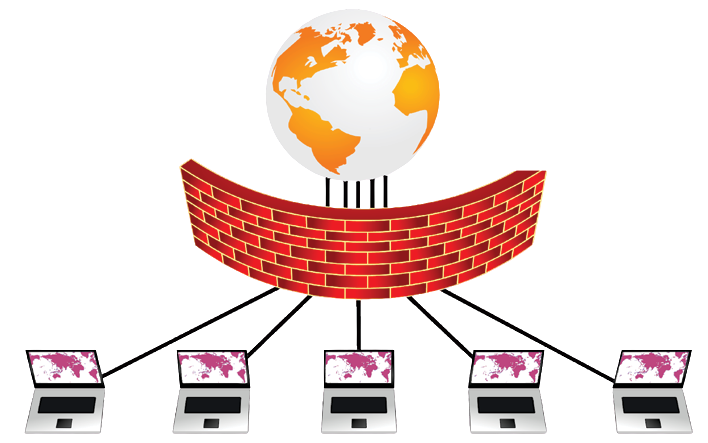
No. Next-Generation Firewalls (NGFWs) are key enforcement points for Zero Trust architecture. Zero Trust builds on top of firewall capabilities by providing additional identity-aware, application layer, and continuous verification controls. NGFWs from Palo Alto, Fortinet and Cisco play a critical role in the deployment of modern Zero Trust initiatives.
5. What are the biggest challenges to the implementation of a Zero Trust model?
The major challenges are cultural and operational, not solely technical. Moving from implicit trust requires a complete re-evaluation of processes, the need to update legacy applications, major changes to identity management, and gaining approval from executives. Good change management, phased implementations, and success are all important factors.